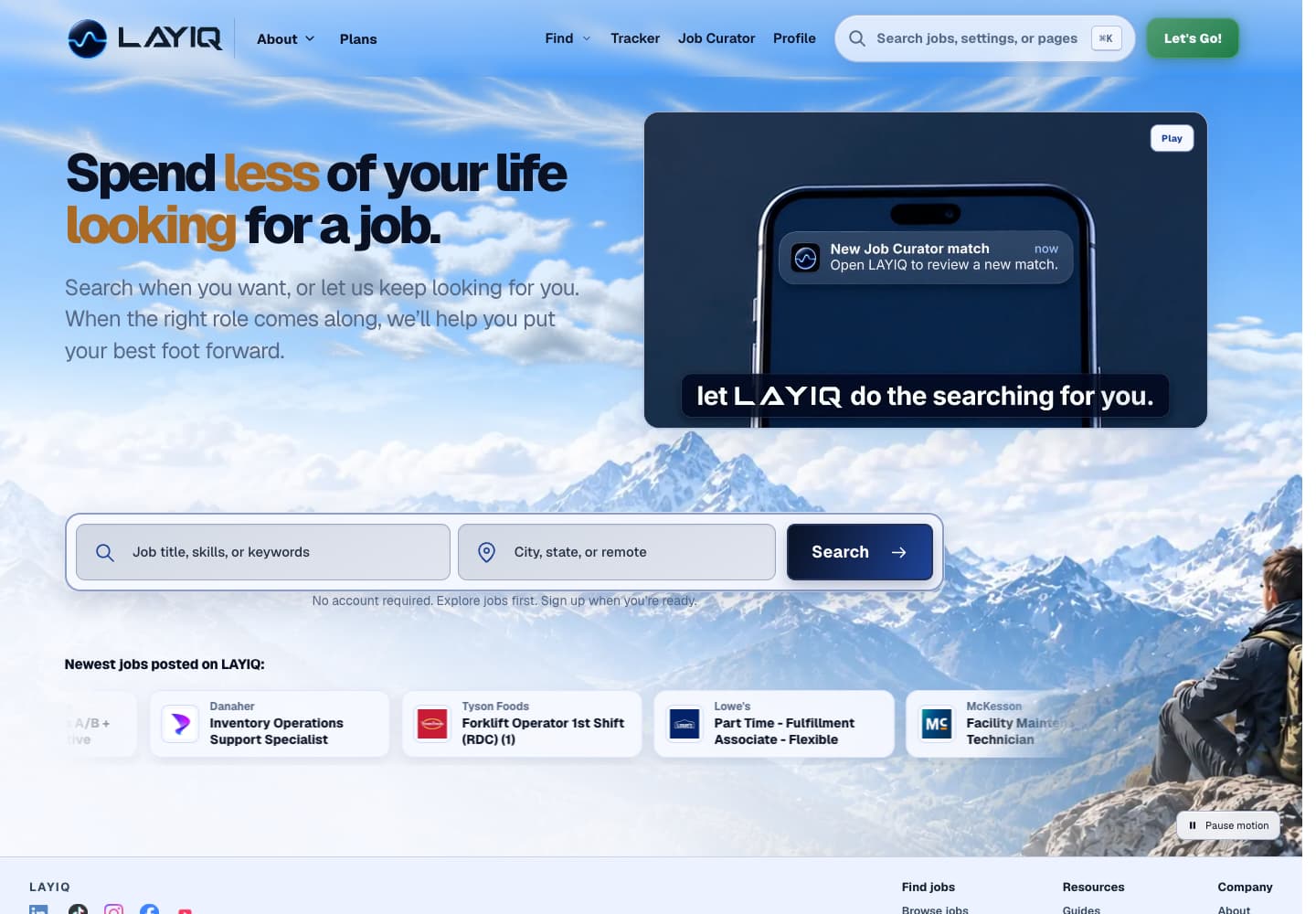
01A complete web application
Public discovery and a personal workspace share the same product foundation.
Technical detail +
- Next.js and React interfaces written in TypeScript.
- Python APIs separate product rules from presentation.
- Onboarding, profiles, saved roles, application tracking, and document workflows.
One coherent product can support discovery, conversion, and ongoing customer use.
02PostgreSQL as the source of truth
Durable records keep the product consistent across searches, devices, and background work.
Technical detail +
- Relational persistence for accounts, preferences, tracked applications, and workflow state.
- Versioned search intents and canonical job identities.
- Schema migrations and account-scoped data access.
Business rules and customer history stay anchored in a dependable data model.
03OpenSearch-powered discovery
A dedicated search layer handles retrieval while PostgreSQL retains the canonical records.
Technical detail +
- Structured title, company, location, and eligibility filters.
- Search indexing is separated from transactional storage.
- Results hydrate canonical records and recheck eligibility before presentation.
Rich search can grow without forcing the application database to do every kind of work.
04LightGBM recommendations
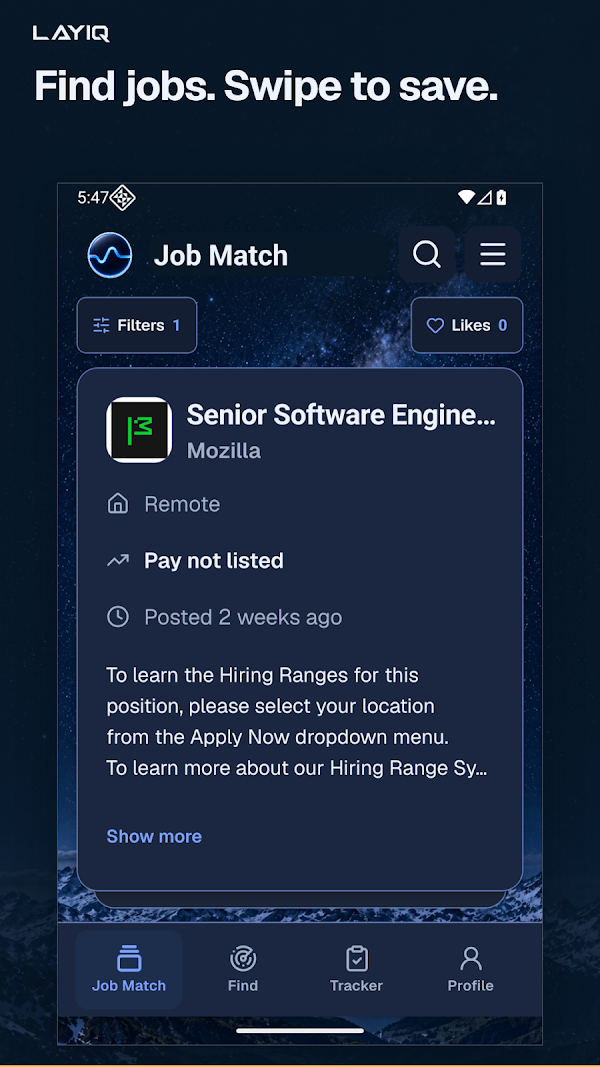
Job Match uses learned preferences to decide which opportunity to show next.
Technical detail +
- Gradient-boosted LightGBM models train offline and export their trees to JSON.
- NumPy evaluates the exported trees in the serving process, with prediction-parity checks.
- Features combine profile similarity, role attributes, freshness, and interaction history.
- A per-member Bayesian logistic layer adapts to personal feedback.
Recommendations respond to individual choices instead of relying on the same ordering for everyone.
05An evaluated model lifecycle
The recommendation system includes the machinery to improve models and control their release.
Technical detail +
- A nightly training pipeline can learn from pooled member decisions when data requirements are met.
- Member-separated holdouts, log-loss and AUC gates assess candidate models.
- Versioned model artifacts, integrity checks, rollback, and erasure-aware retirement.
- Selection probabilities are recorded to support less biased evaluation.
Machine learning becomes an accountable product system with measurable promotion criteria.
06Evidence-backed AI workflows
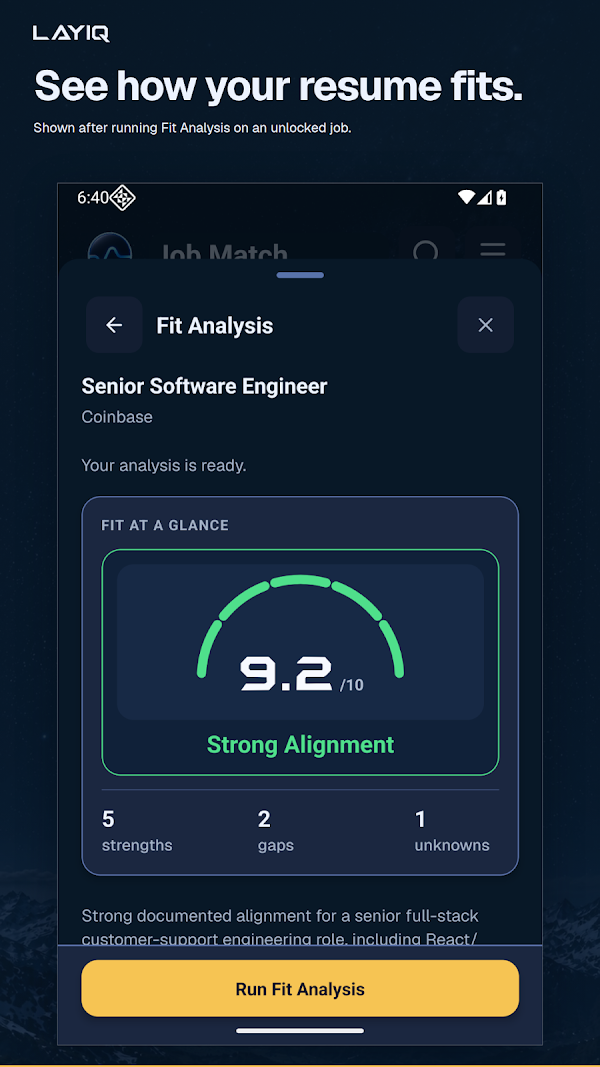
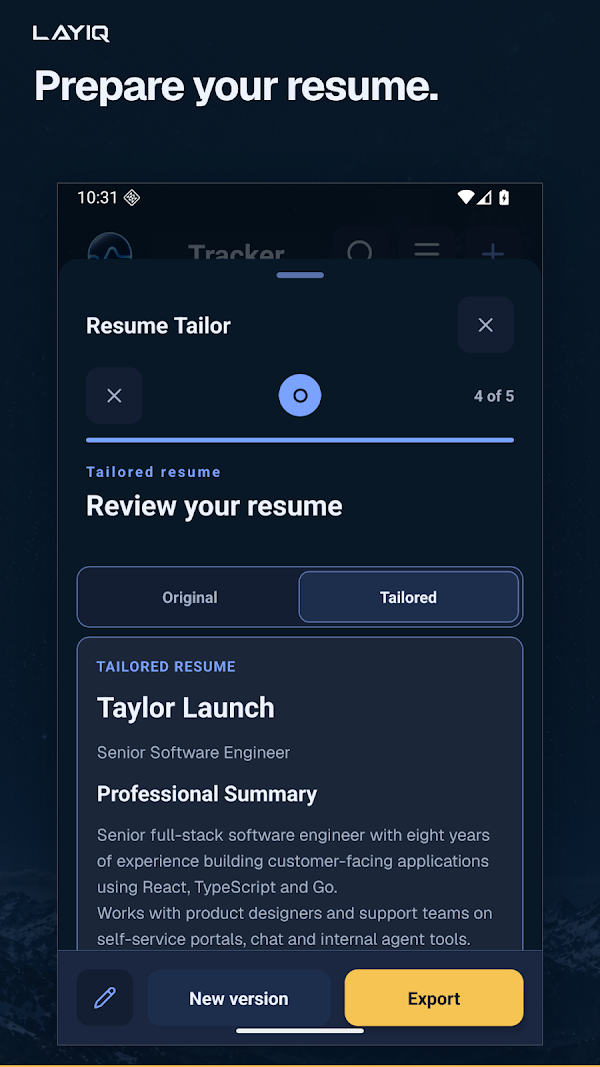
Fit Analysis and document assistance turn source material into useful next actions.
Technical detail +
- Resume ingestion and structured candidate evidence.
- Fit Analysis validates model output against the candidate and role evidence.
- Resume and cover-letter tailoring workflows.
- Fit Analysis remains separate from search retrieval and Job Match’s preference model.
AI has a defined job, supported inputs, and a clear place in the customer journey.
07Automation, accounts & billing
The product connects recurring work and commercial access to each customer’s account.
Technical detail +
- Saved-search and Job Curator workflows for continued discovery.
- Clerk identity and account-scoped permissions.
- Stripe billing, server-owned plan entitlements, and webhook reconciliation.
A working platform can support recurring value and paid customer relationships.
08Observable, discoverable software
Search visibility and operational feedback are part of the implementation.
Technical detail +
- Server-rendered public pages, canonical URLs, sitemaps, and crawl rules.
- Source-backed JobPosting, organization, product, and breadcrumb structured data.
- Sentry error reporting, PostHog product events, and automated browser and contract checks.
The product can be found, measured, diagnosed, and improved after launch.