01Native iOS game engineering
The iOS implementation brings a real game loop into a mobile application.
Technical detail +
- SpriteKit scenes and nodes written in Swift.
- SwiftUI hosts the game and app interface.
- Scene layers separate the playfield, actors, effects, and HUD.
- Portrait presentation fits short, touch-driven play sessions.
A mobile experience can respond continuously rather than behave like a collection of web forms.
02Gameplay and visual effects stay separate
A successful dodge becomes a visual payoff without turning into a second obstacle.
Technical detail +
- Bird state machines distinguish active threats from resolved effects.
- Collision and near-miss envelopes define the interaction rules.
- Bonk resolution runs outside the active dodge system.
- Deterministic fairness checks cover hits, near misses, and clean passes.
The game can look lively while keeping the player’s rules understandable and fair.
03Data-driven content and difficulty
Stages and birds are described as reusable content rather than one-off screens.
Technical detail +
- JSON catalogs decode into typed stage, world, and bird definitions.
- Wave scheduling and stage configuration control pacing.
- Playfield templates and projection keep gameplay coordinates consistent.
- Per-bird tuning supports different movement patterns and collision behavior.
New content can build on a shared system instead of requiring the game to be rewritten for every level.
04Progression on the device
Stars, scores, discoveries, and unlocks give each run a place in a longer journey.
Technical detail +
- Saved stage records include best scores, stars, and completion state.
- World and boss access follow explicit progression rules.
- Bird discoveries and near-miss achievements feed collection progress.
- The published game can be played without creating an account.
A lightweight experience can still remember achievement and give players a reason to return.
05Touch, feedback, and presentation
The interaction combines quick movement with readable visual and sensory feedback.
Technical detail +
- Swipe-based dodging and visible threat patterns.
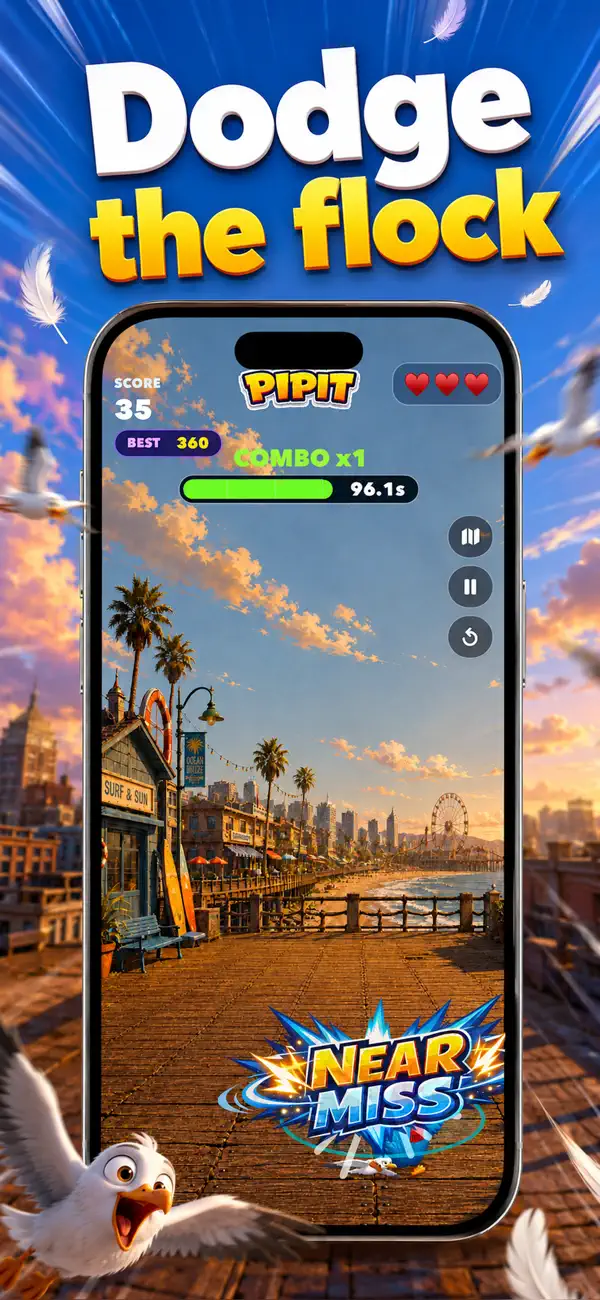
- Sprites, layered environments, and immediate score and near-miss feedback.
- Audio, haptics, and settings are part of the published game experience.
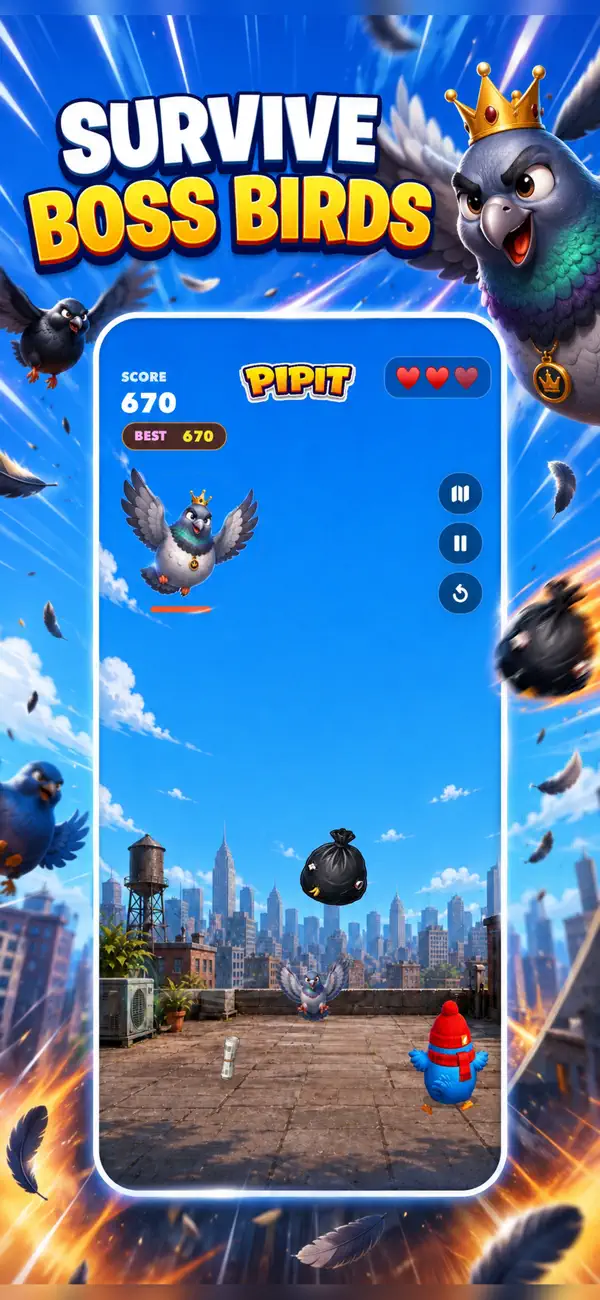
- The game’s own App Store screenshots show play, bosses, and progression.
Good mobile engineering connects what a person does to a response they can immediately understand.
06A product beyond the game scene
The project also includes the public surfaces needed to explain and support a released game.
Technical detail +
- App Store game presentation and a direct download destination.
- A public product page with platform-specific download paths.
- Press assets, gameplay screenshots, privacy information, and a feedback form.
- Store presentation uses actual gameplay rather than a generic brand illustration.
Shipping an app includes its discovery, communication, and support experience.
 PIPIT!